Taking the Ferry From Spain to Morocco
Did you know over a million travelers cross the Strait of Gibraltar every year? This makes the ferry from Spain to Morocco very busy and popular.
When planning your trip, it’s important to know what to do. You need to pick the right ferry route and company. Also, make sure you have all the necessary documents.
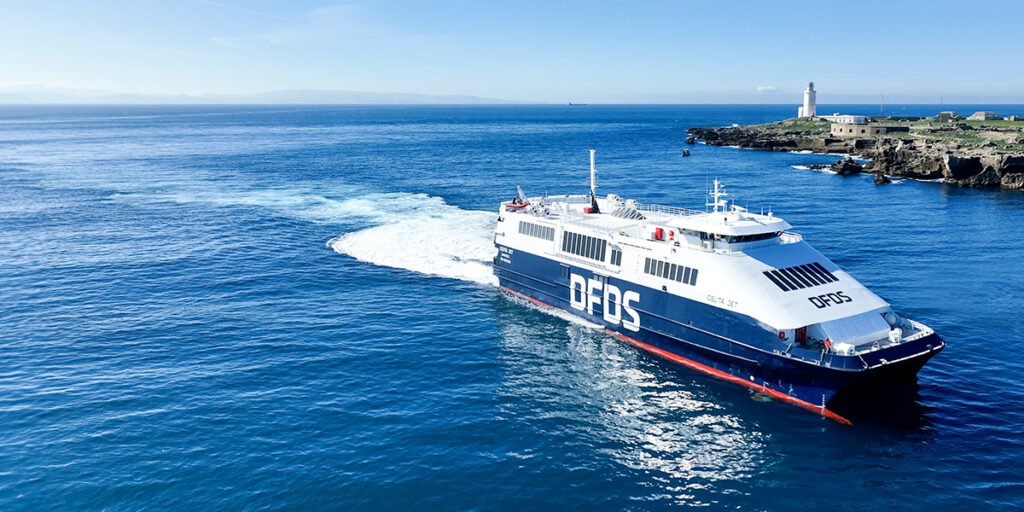
This guide will help you get ready for your spain to morocco ferry trip. You’ll know what to expect and how to enjoy your journey.
Key Takeaways
- Understand the different ferry routes and companies operating between Spain and Morocco.
- Learn about the necessary documentation required for your journey.
- Discover the types of ferries available and their amenities.
- Get tips on booking and preparing for your trip.
- Find out what to expect during the ferry crossing.
Planning Your Spain to Morocco Ferry Journey
Before you start your ferry trip from Spain to Morocco, planning is key. Knowing the ferry schedule and travel choices will make your trip better.
Best Time of Year to Travel
The spring (March to May) and autumn (September to November) are the best times to visit Morocco by ferry. The weather is nice and not too crowded.
Summer is hot, and winters are mild but can be rainy. Think about these when planning your trip for a better experience.
How Much Time to Allow
The ferry ride from Spain to Morocco takes different times. For example, Algeciras to Tangier Med is about 1-2 hours. Always check the morocco ferry schedule before you go.
Make sure to arrive at the port 1-2 hours before your ferry leaves. This helps with check-in and any delays.
Choosing Between a Day Trip or Longer Stay
Deciding on a day trip or a longer stay in Morocco depends on what you like. A day trip offers a quick taste, but a longer stay lets you explore more.
Think about what you want to see and do. For a day trip, focus on your top spots. For a longer stay, enjoy the food and see more places without rushing.
Popular Ferry Routes From Spain to Morocco
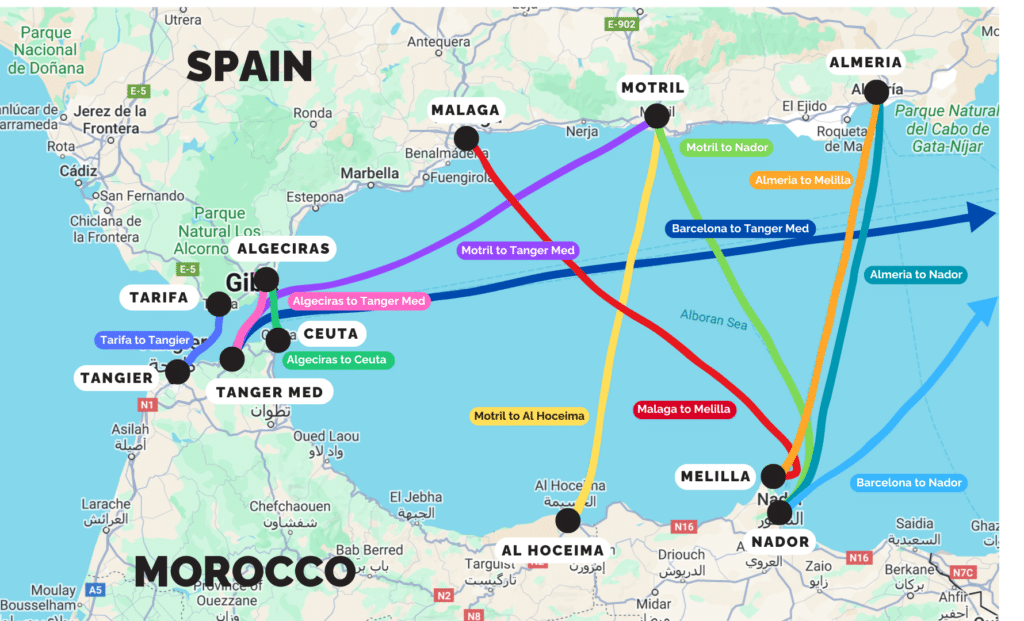
Traveling from Spain to Morocco by ferry has many options. Each route has its own benefits. Choose the one that matches your travel plans and preferences.
Algeciras to Tangier Med
The Algeciras to Tangier Med ferry route is very popular. It has many sailings a day, taking about an hour. It’s great for those with vehicles or in a hurry.
Tarifa to Tangier Ville
The Tarifa to Tangier Ville route is known for its quick 35-minute trip. It’s perfect for day trips or those who want a fast journey. Tarifa’s close location to Morocco makes it a favorite among travelers.
Other Available Routes
There are more ferry services connecting Spain and Morocco. These routes offer different departure and arrival times, and costs. You can look into these options to find the best fit for you.
When picking a ferry route, think about travel time, how often it sails, and the cost. Comparing these can help you choose the best option for a great trip.
Ferry Companies Operating the Spain-Morocco Route
Traveling from Spain to Morocco by ferry offers several reliable options. Each company caters to different needs with various services.
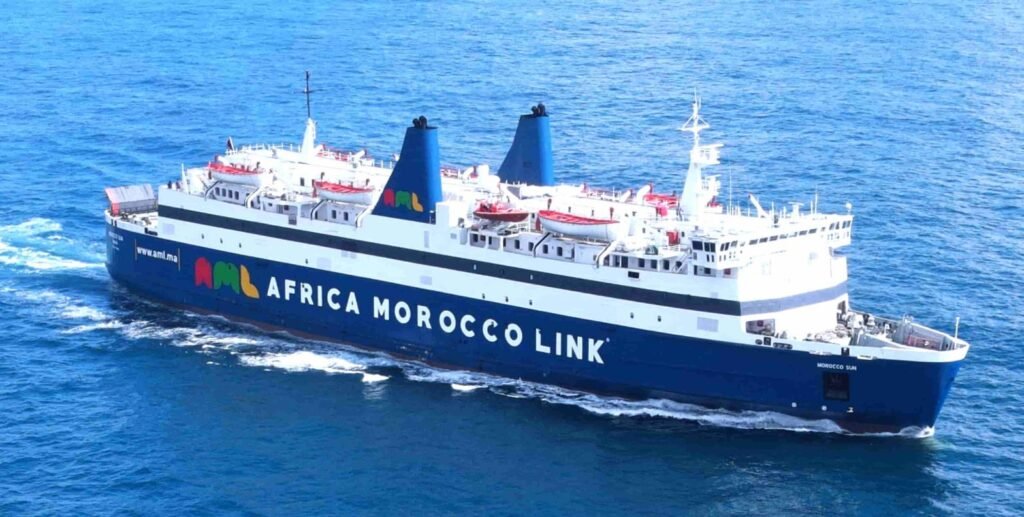
FRS Ferries
FRS Ferries is a top choice for the Spain-Morocco route. They are known for fast and reliable services. Their frequent sailings between Algeciras and Tangier Med make travel easy.
FRS Ferries focuses on comfort and safety. They offer a pleasant journey with amenities onboard.
Baleària
Baleària is a major player in Spain-Morocco ferry services. They have high-speed ferries that cut down travel time. Their modern fleet and comfortable facilities meet various traveler needs.
Trasmediterránea and Other Operators
Trasmediterránea has been a trusted name for decades. They offer reliable services between Spain and Morocco. Alongside FRS Ferries and Baleària, other operators provide more choices.
When picking a ferry company, think about travel time, amenities, and sailing frequency. This will help you find the best ferry for your trip.
Understanding Ferry Types and Services
Knowing the differences between ferry types is key for a great trip from Spain to Morocco. The ferry you pick can really change your travel experience.
Fast Ferries vs. Conventional Ferries
Fast ferries and conventional ferries meet different needs. Fast ferries are perfect for those in a hurry, cutting travel time in half. But, they might not have as much comfort or amenities as conventional ferries.
Conventional ferries offer a more laid-back trip. They have more room to move and a variety of services. They’re great for those with cars or who like a calm journey.
Onboard Amenities and Services
Ferry companies between Spain and Morocco have many amenities to make your trip better. You can find dining, entertainment, and comfy seats.
| Ferry Type | Travel Time | Onboard Amenities |
|---|---|---|
| Fast Ferry | Approximately 1 hour | Limited dining options, basic seating |
| Conventional Ferry | Approximately 2-3 hours | Varied dining options, entertainment, comfortable seating |
Think about what’s important to you: speed, comfort, or services. Whether you choose a fast ferry or a conventional one, you’ll find a pleasant journey.
Ferry From Spain to Morocco Cost Breakdown
Traveling by ferry from Spain to Morocco has different costs. The total cost depends on several things. These include the ticket type, if you’re bringing a vehicle, and when you travel.
Passenger Ticket Prices
Prices for ferry tickets vary. FRS Ferries and Baleària have competitive prices. A one-way ticket starts at €30-€50 for a standard fare. But, prices go up for higher classes or during busy times.
Vehicle Transport Fees
Traveling with a vehicle adds extra costs. Fees for transporting a vehicle range from €50 to €150 or more. This depends on your vehicle’s size and the ferry operator. Always check with the operator for the best price.
Seasonal Price Variations
Ferry prices change with the season. Peak season, like summer and holidays, has higher prices. Off-season travel can be cheaper. Planning for off-peak times can save you money.
| Ferry Operator | One-Way Passenger Ticket | Vehicle Transport Fee |
|---|---|---|
| FRS Ferries | €30-€50 | €50-€100 |
| Baleària | €35-€55 | €60-€120 |
| Trasmediterránea | €40-€60 | €70-€150 |
Knowing these costs helps you plan your ferry trip from Spain to Morocco. You can budget better this way.
How to Book Your Ferry Tickets
Booking your ferry tickets from Spain to Morocco is easy. You can do it online or at the terminal. There are many ferry operators to choose from, each with its own way of booking.
Online Booking Options
Booking online is convenient and can save you money. Companies like FRS Ferries, Baleària, and Trasmediterránea let you book on their websites. You can also use travel agencies and comparison sites to find deals.
When booking online, you’ll need to give your travel dates, how many people are coming, and if you’re bringing a car.
Booking at the Terminal
Booking in person at the terminal offers a personal touch. You can talk to staff, ask questions, and get help with special needs. But, booking at the terminal might not be available during busy times, so arrive early.
Tips for Getting the Best Prices
To get the best prices, book early. Prices go up as the departure date gets closer. Being flexible with your travel dates can also help you save.
Look for promotions, discounts, or loyalty programs from ferry operators. Using a comparison website can also help you find the best deal for your trip.
Required Documentation and Border Procedures
To have a smooth trip from Spain to Morocco, know the needed documents and border steps. Traveling between these places has formal steps you must know. This helps avoid any last-minute problems.
Passport and Visa Requirements
Make sure your passport is valid for at least six months beyond your stay in Morocco. Many countries, like EU, US, and Canada, don’t need a visa for up to 90 days. But, always check the latest visa rules for your country before you go. Some might need a visa before traveling, while others can get one when they arrive.
Customs Regulations
Traveling from Spain to Morocco means knowing the customs rules. Some items, like firearms, narcotics, and pork products, are not allowed. There are also limits on alcohol and tobacco. Always tell the truth about your goods to avoid fines or losing them.
Health and Safety Requirements
Morocco has health rules, including some vaccinations. While no specific shots are needed for entry, staying current on routine ones is wise. Morocco also has public health and safety steps. So, it’s smart to check the latest health advice before your trip.
By knowing and following these rules, your trip from Spain to Morocco will be smooth and fun.
Traveling with Vehicles on the Ferry
You can bring your vehicle on the ferry from Spain to Morocco. This makes traveling easier for you. The ferry can handle cars, motorcycles, and even caravans.
Car Requirements and Documentation
Before you go, check if your vehicle meets the requirements. You’ll need your vehicle’s registration and insurance. Some ferry operators might ask for more info, so it’s good to check ahead of time.
Make sure your vehicle is ready. It should have the right tire pressure and enough fuel for the trip.
Loading and Unloading Procedures
At the ferry terminal, you’ll go through check-in and loading. Vehicles use a ramp to get on the ferry. You’ll find a parking spot on the ship.
When it’s time to leave, listen to the crew. They’ll guide you off the ferry safely.
Driving in Morocco: What to Know
In Morocco, you’ll drive on the right side of the road. Always wear a seatbelt. Morocco’s roads can be different, so be careful.
Consider getting an International Driving Permit if your license isn’t in French or Arabic. Know the local traffic signs and rules for a safe drive.
Step-by-Step Guide to the Ferry Experience
Your journey from Spain to Morocco begins with a simple check-in process. Knowing what to expect makes your trip smoother and more fun.
Check-in and Boarding Process
Getting to the ferry terminal early is a good idea. This lets you have plenty of time for check-in and boarding. You’ll need to show your ticket, passport, and any visas needed.
After checking in, you can drop off your luggage. Then, you’ll go through security before getting on the ferry.
Tips for a smooth boarding process:
- Have all your documents ready.
- Arrive early to avoid last-minute rush.
- Follow the signage and instructions from ferry staff.
What to Expect During the Crossing
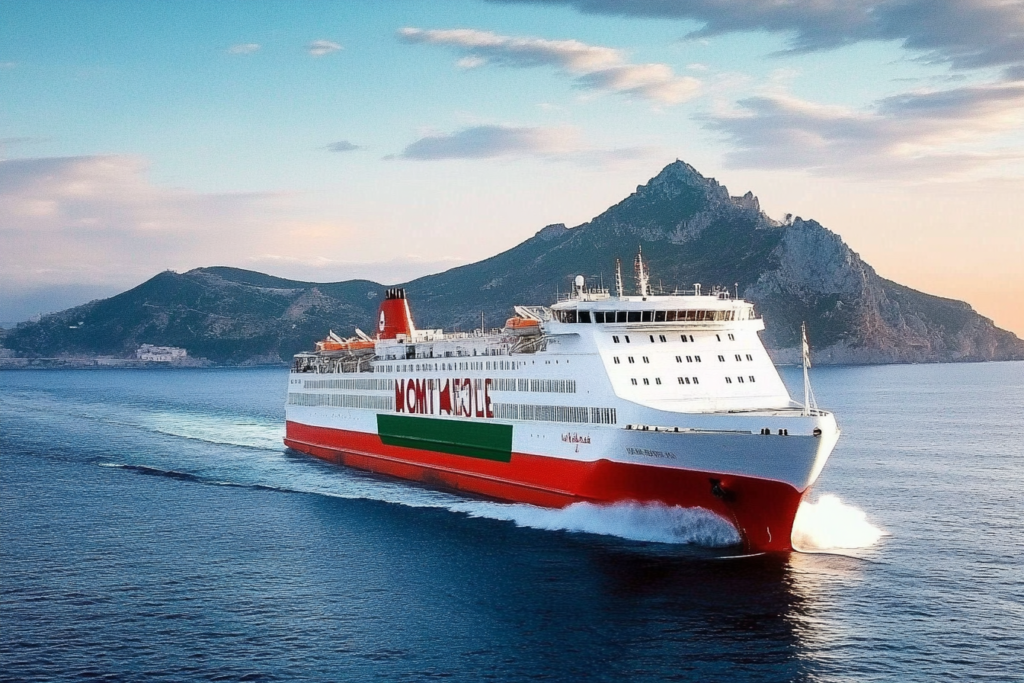
Once on board, you’ll find different amenities. These include places to eat, comfy seats, and sometimes cinemas or play areas for kids. The trip’s length depends on the route, but it’s usually comfortable with beautiful views.
On the trip, you can buy meals and snacks. You can also relax in seats or walk on the deck to see the sea.
Arrival and Disembarkation in Morocco
When you arrive in Morocco, you’ll get off the ferry. Then, you’ll go through customs and immigration. Make sure you have your documents ready and know the customs rules.
Remember to stay hydrated and keep an eye on your belongings during disembarkation.
Conclusion: Making the Most of Your Spain to Morocco Ferry Adventure
Now that you know how to plan your Spain to Morocco ferry trip, it’s time to start your adventure. The journey from Spain to Morocco is filled with different cultures, landscapes, and experiences. You’re ready to explore them all.
When you travel from Spain to Morocco or back, don’t forget your documents. Enjoy the onboard amenities and services. Whether it’s a day trip or a longer stay, the ferry ride is just the start of your journey.
Immerse yourself in the local culture and try the tasty food. Explore the historic sites. With good planning and preparation, your ferry trip from Spain to Morocco will be unforgettable.
FAQ
What is the best ferry from Spain to Morocco?
The best ferry depends on what you need, like travel time and budget. FRS Ferries, Baleària, and Trasmediterránea are popular. They offer routes like Algeciras to Tangier Med and Tarifa to Tangier Ville.
How long does the ferry crossing from Spain to Morocco take?
The crossing time varies. The Algeciras to Tangier Med route takes 1-2 hours. The Tarifa to Tangier Ville route is about 35-40 minutes on a fast ferry.
Can I book a ferry ticket from Spain to Morocco online?
Yes, you can book online through FRS Ferries, Baleària, and Trasmediterránea’s websites. Or use online ticketing platforms. Booking early helps get the best prices.
What documentation do I need to travel from Spain to Morocco by ferry?
You’ll need a valid passport and possibly a visa. Remember to follow customs and health rules.
Can I take my vehicle on the ferry from Spain to Morocco?
Yes, you can bring your vehicle. You’ll need your vehicle’s documents and insurance. Follow the terminal’s loading and unloading rules.
How do I check-in and board the ferry from Spain to Morocco?
Arrive early at the terminal. Follow signs to check-in. Show your ticket and ID, then board the ferry.
What are the ferry schedules from Spain to Morocco?
Schedules change by route, company, and season. Check the latest on ferry websites or at terminals. Plan ahead to book the right time.
How much does it cost to travel by ferry from Spain to Morocco?
Prices vary by route, ferry type, and season. Expect to pay €30 to €100 or more per person. There are extra fees for vehicles and services.