How to Travel to Tangier: Flights, Trains, and Ferries Explained
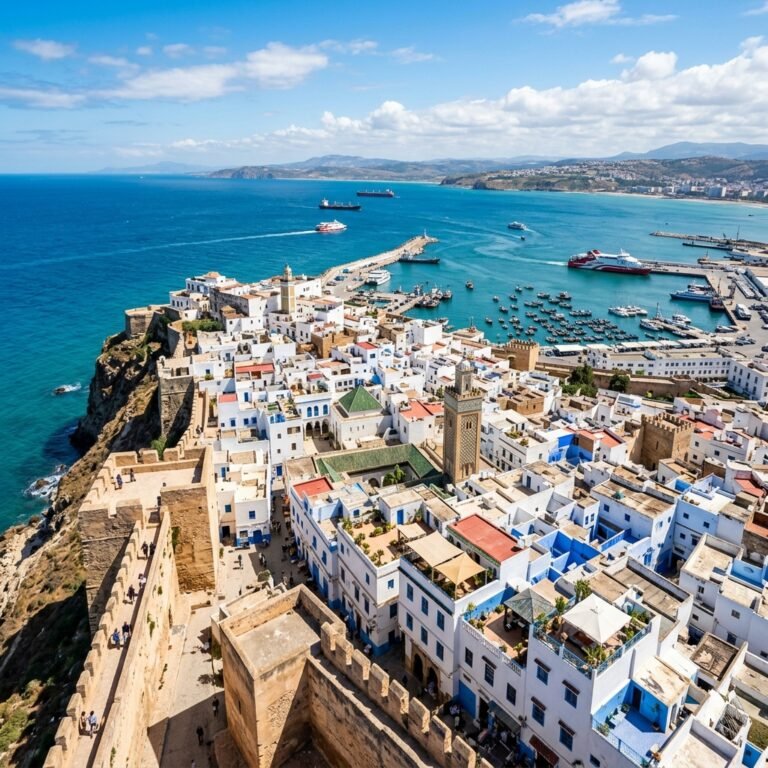
Planning to travel to tangier? You are making a brilliant choice. Positioned at the very edge of North Africa, just a stone’s throw across the Strait of Gibraltar from Spain, Tangier has served as Europe’s gateway to Africa for centuries. Whether you’re drawn by the romanticized stories of the Beat Generation writers, the stunning Mediterranean and Atlantic coastlines, or the aromatic spices wafting through the historic Medina, getting to this vibrant city is easier today than it has ever been.
In this comprehensive, ultimate guide on how to travel to tangier, we will dissect every single transportation method available. We cover the intricacies of arriving by airplane, navigating the high-speed rail network, and experiencing the classic romanticism of crossing the sea by ferry. We will also provide practical advice on passport controls, customs, and how to get from your arrival point to the best riads and hotels in the city.
1. Taking to the Skies: Flying into Tangier Ibn Battuta Airport (TNG)
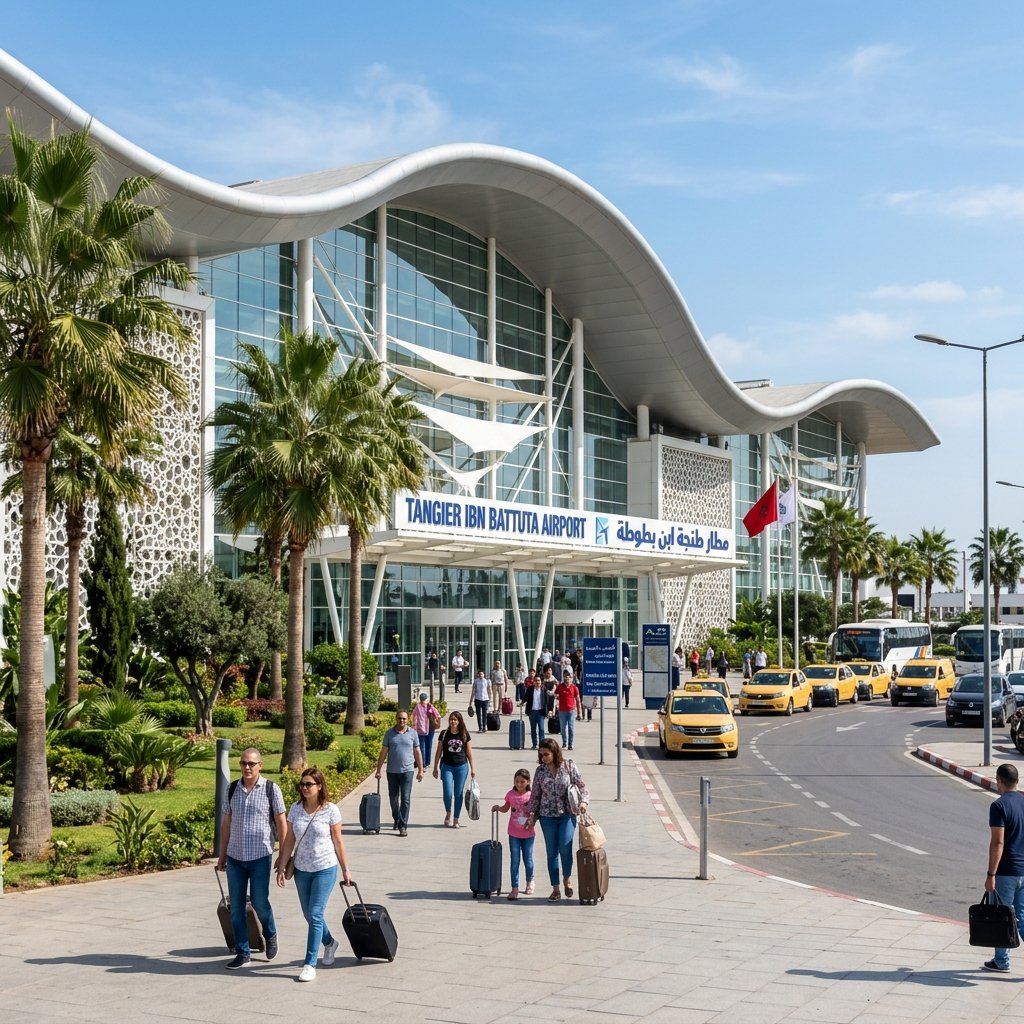
For most international visitors coming from outside of Spain or neighboring European countries, flying is the most practical way to travel to tangier. The city is served by the Tangier Ibn Battuta Airport (TNG), named after the famous 14th-century Moroccan scholar and traveler who was born in the city.
Airlines and Direct Routes
In recent years, Tangier has seen a massive expansion in direct flight routes, primarily driven by the growth of low-cost carriers in Europe. If you are flying from the UK, France, Spain, Italy, or Germany, you will likely find direct, affordable flights.
- Low-Cost Carriers: Airlines like Ryanair and Air Arabia offer incredibly cheap flights from major European hubs like London Stansted, Paris Beauvais, Madrid, and Milan. It is not uncommon to find round-trip tickets for under €50 if you book a few months in advance.
- National Carriers: Royal Air Maroc (RAM) operates frequent daily flights connecting Tangier to the massive international hub of Casablanca (Mohammed V International Airport). If you are flying from the United States, Canada, or Asia, your most likely route will involve flying into Casablanca on a major carrier and taking a 45-minute connecting flight to Tangier.
- European Flag Carriers: Airlines such as Iberia (Air Nostrum), Air France, and TAP Air Portugal offer regular services connecting Tangier to Madrid, Paris, and Lisbon respectively.
Arriving at the Airport: Customs and Transportation
Tangier Ibn Battuta Airport is relatively small and manageable, which makes the arrival process straightforward. Upon landing, you will proceed to passport control. Make sure you have filled out the landing card (often handed out on the plane) before joining the queue. Citizens of the US, UK, Canada, Australia, and most EU countries do not need a visa for tourist visits of up to 90 days, making it very easy to travel to tangier on a whim.
Once you clear customs and collect your luggage, you need to get to the city center, which is located about 12 kilometers (7.5 miles) away. Unfortunately, there is no direct public bus or train linking the airport to the city. Your main option is to take a “Grand Taxi” (the larger, usually cream-colored vans or cars). The prices are fixed and posted on a board outside the terminal—expect to pay around 100 to 150 Moroccan Dirhams (MAD) during the day, with a slight surcharge at night. The drive to the city center or the Medina takes approximately 20 to 30 minutes depending on traffic.
2. Riding the Rails: The Al Boraq High-Speed Train
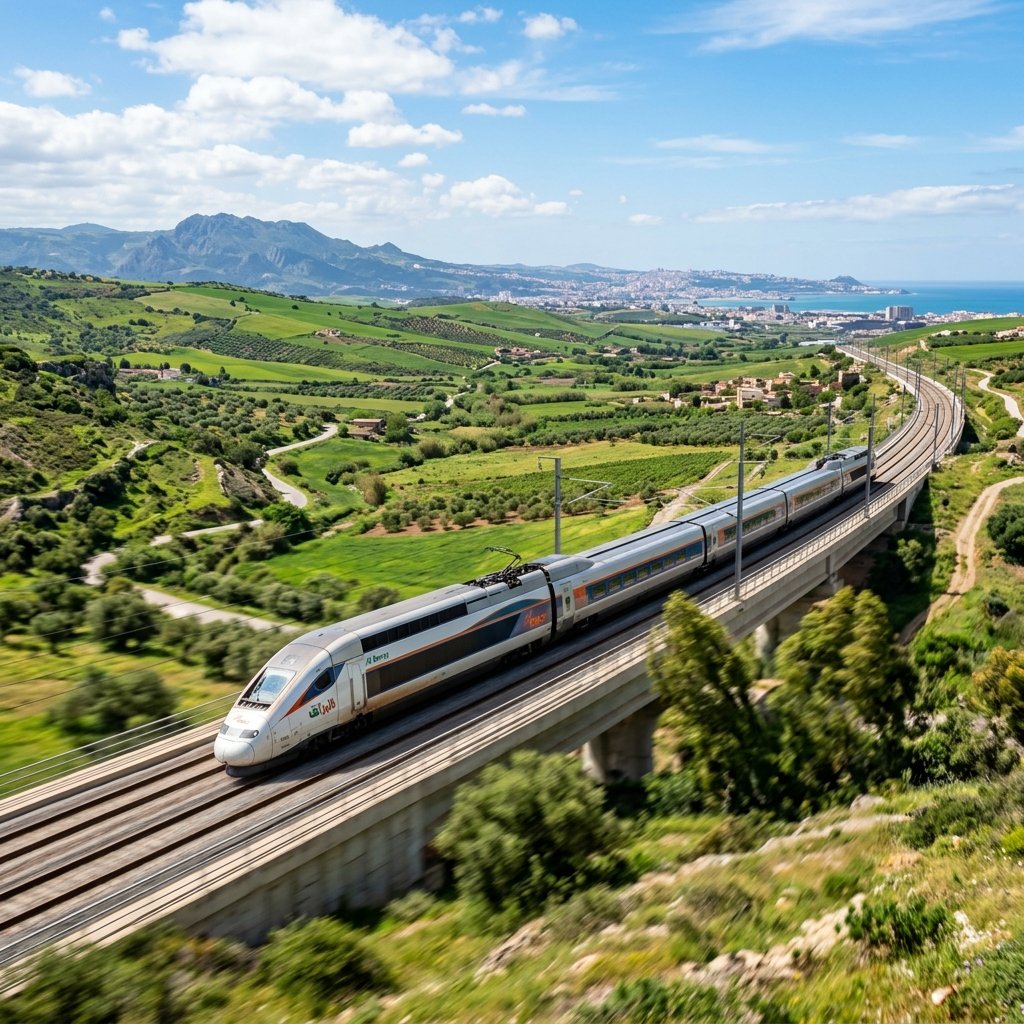
If you are already in Morocco, the absolute best way to travel to tangier is by train. In 2018, Morocco inaugurated the Al Boraq, Africa’s first high-speed rail line. Named after the mythical winged creature from Islamic tradition, the Al Boraq is a marvel of modern engineering and has revolutionized domestic travel in Morocco.
Routes, Travel Times, and Comfort
Before the Al Boraq, taking the train from Casablanca to Tangier was a scenic but exhausting 5-hour journey. Today, the high-speed train connects the economic capital (Casablanca) to Tangier in just 2 hours and 10 minutes. The train also stops at the capital city of Rabat (1 hour and 20 minutes from Tangier) and the city of Kenitra (50 minutes from Tangier).
The trains are double-decker, featuring both first-class and second-class seating. First class offers spacious, plush reclining seats with ample legroom, dedicated luggage racks, and power outlets. Second class is also highly comfortable and air-conditioned, making it a viable option for budget travelers. Regardless of the class, there is a cafeteria car offering coffee, tea, and light snacks.
Booking Train Tickets
Tickets for the Al Boraq can be purchased online via the official ONCF website. However, the site frequently has issues processing foreign credit cards. If your card is declined, don’t panic. You can purchase tickets directly at the station using cash or a card. While trains do sell out during major Moroccan holidays or busy summer weekends, you can usually secure a seat by booking a day or two in advance. Fares are remarkably affordable; a first-class ticket from Casablanca to Tangier usually costs around 250 MAD (roughly $25 USD).
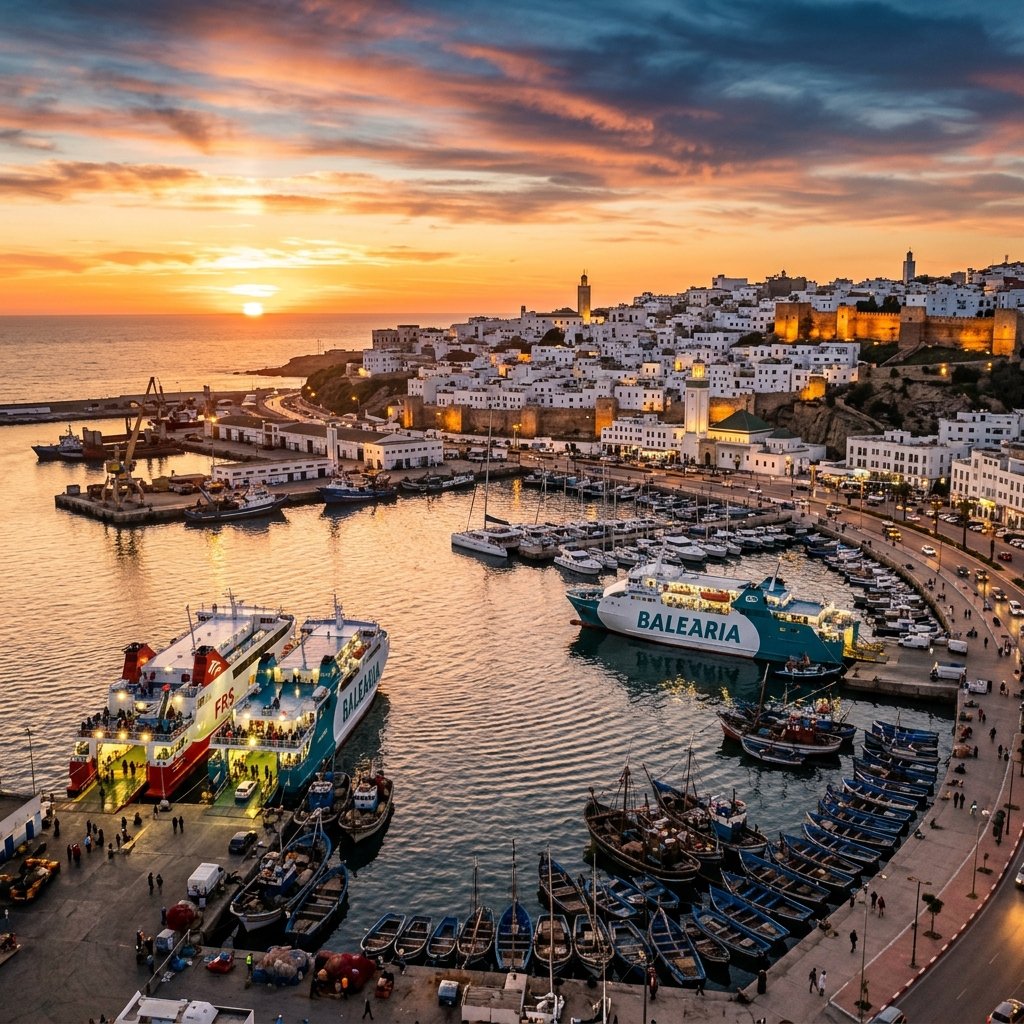
The train terminates at the newly renovated Tangier Ville station, which is conveniently located in the modern part of the city, right next to the Hilton hotel and the Malabata beach. From the station, you can easily catch a blue “Petit Taxi” to your accommodation for 15 to 30 MAD.
3. Crossing the Strait: The Classic Ferry Experience
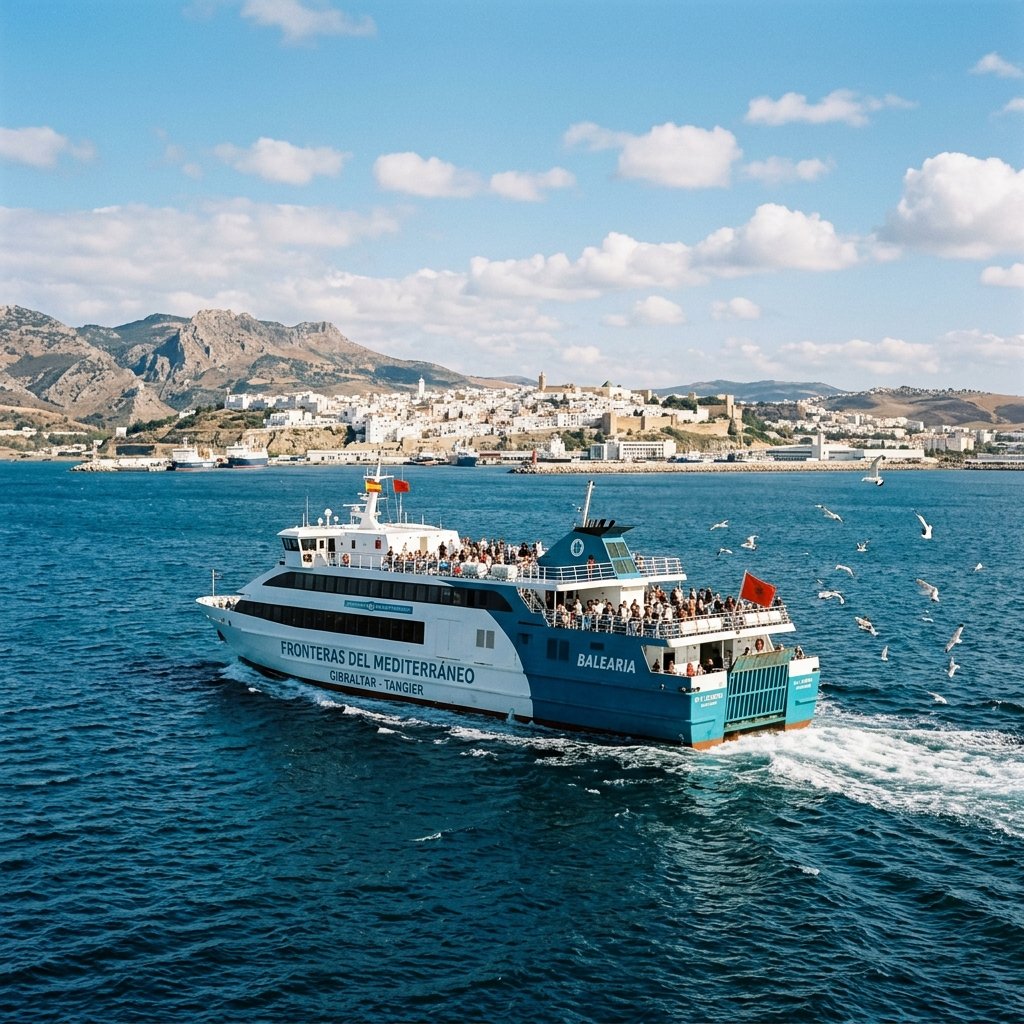
For many travelers, the most romantic and historic way to travel to tangier is by crossing the Strait of Gibraltar by sea. Standing on the deck of a ferry, feeling the sea breeze, and watching the European continent fade away as the minarets of Africa come into view is an unforgettable travel experience.
However, traveling by ferry requires careful planning, as there are two completely different ports in Tangier, and arriving at the wrong one can cost you hours of extra travel time.
Route A: Tarifa to Tangier Ville (The Best Route for Tourists)
If you are traveling as a foot passenger without a car, this is the route you must take. The ferry departs from the small, wind-swept Spanish town of Tarifa and arrives directly at the Tangier Ville port, which is located right at the foot of the Tangier Medina. You can literally walk off the boat and be at your hotel in ten minutes.
The crossing takes about 60 minutes. Two main companies operate this route: FRS and Inter Shipping. Ferries run frequently throughout the day, roughly every two hours. A crucial piece of advice: you will pass through Moroccan passport control while on the ferry. Look for the police desk inside the passenger lounge as soon as you board, fill out your landing card, and get your passport stamped before the boat docks. If you wait until you disembark, you will be sent back onto the empty ship to find the officer.
Route B: Algeciras to Tangier Med (The Route for Vehicles)
If you have rented a car in Spain and plan to drive in Morocco, you will need to take the ferry from the large industrial port of Algeciras to the Tangier Med port. Tangier Med is a massive commercial cargo and passenger port located about 40 kilometers (25 miles) east of Tangier city proper.
The crossing from Algeciras to Tangier Med takes about 90 minutes to 2 hours, utilizing larger, slower ferries operated by companies like Baleària, FRS, and AML. While this is necessary if you have a vehicle, foot passengers should avoid this route at all costs. Getting from Tangier Med into the city of Tangier requires an expensive 45-minute grand taxi ride (around 200 MAD) or navigating the infrequent local bus schedule.
4. Crucial Tips for Your Arrival in Tangier
Regardless of how you choose to travel to tangier, your arrival in this bustling, vibrant city will be an assault on the senses. To make your transition as smooth as possible, keep these essential tips in mind:
Currency and Cash
The local currency is the Moroccan Dirham (MAD), which is a closed currency—meaning you cannot legally buy or sell it outside of Morocco. Do not bother trying to exchange money at your home bank before you leave. Instead, arrive with Euros, US Dollars, or British Pounds. You will find currency exchange booths and ATMs immediately upon arriving at the airport, train station, or ferry terminal.
Cash is king in Morocco. While large hotels and fancy restaurants accept credit cards, you will need cash for taxis, small cafes, buying street food, and shopping in the souks. Make sure to break large 200 MAD notes into smaller 20 and 50 MAD notes as soon as possible, as taxi drivers rarely have change.
Navigating the Taxis
Tangier has two types of taxis. “Petit Taxis” are small, light blue cars (often Dacia Logans or Peugeot 208s). They are legally only allowed to operate within the city limits and can carry a maximum of three passengers. By law, they must use a meter (compteur). As soon as you get in, point to the meter and say “compteur, s’il vous plaît.” If the driver refuses, politely get out and hail another one. Petit Taxis are incredibly cheap; a ride across the city usually costs less than $3 USD.
The second type is the “Grand Taxi.” These are larger vehicles, traditionally old Mercedes sedans but increasingly modern minivans, painted a cream or tan color. They operate on fixed routes between towns (e.g., from Tangier to Chefchaouen) or from the airport/Tangier Med port to the city. You share the taxi with up to six other people and pay for your individual seat, though you can choose to pay for all the seats if you want the car to yourself.
Language and Communication
The linguistic landscape of Tangier is deeply fascinating. Because of its history as an International Zone and its proximity to Spain, Tangier is arguably the most multilingual city in Morocco. The local language is Darija (Moroccan Arabic), but virtually everyone speaks French. Furthermore, a massive percentage of the population speaks fluent Spanish.
English is increasingly understood, especially among the younger generation and those working in the tourism industry, but learning a few basic phrases in French or Darija will go a long way in earning the respect and smiles of the locals. A simple “Shukran” (Thank you) or “Salam Alaikum” (Peace be upon you / Hello) is always appreciated.
Conclusion: The Gateway Awaits
To travel to tangier is to step into a city that defies simple categorization. It is African, yet deeply influenced by Europe. It is fiercely modernizing with high-speed trains and new ports, yet its ancient Medina remains completely untouched by time. Whether you fly, take the train, or cross the sea by ferry, the journey to Tangier is just the beginning of a remarkable Moroccan adventure.
Once you arrive and settle in, be sure to check out our perfect 2-day itinerary to start planning your days. You’ll want to explore the best free activities in the city and, of course, indulge in the incredible local food scene. The White City is waiting to be explored!
Frequently Asked Questions About Traveling to Tangier
Q: Is there a high-speed train to Tangier?
A: Yes, the Al Boraq high-speed train connects Tangier to Casablanca in just 2 hours and 10 minutes, making it the fastest way to travel from the south.
Q: How long is the ferry from Spain to Tangier?
A: The fastest ferry from Tarifa (Spain) to Tangier Ville port takes only 1 hour.
Read Next: Where to Stay in Tangier