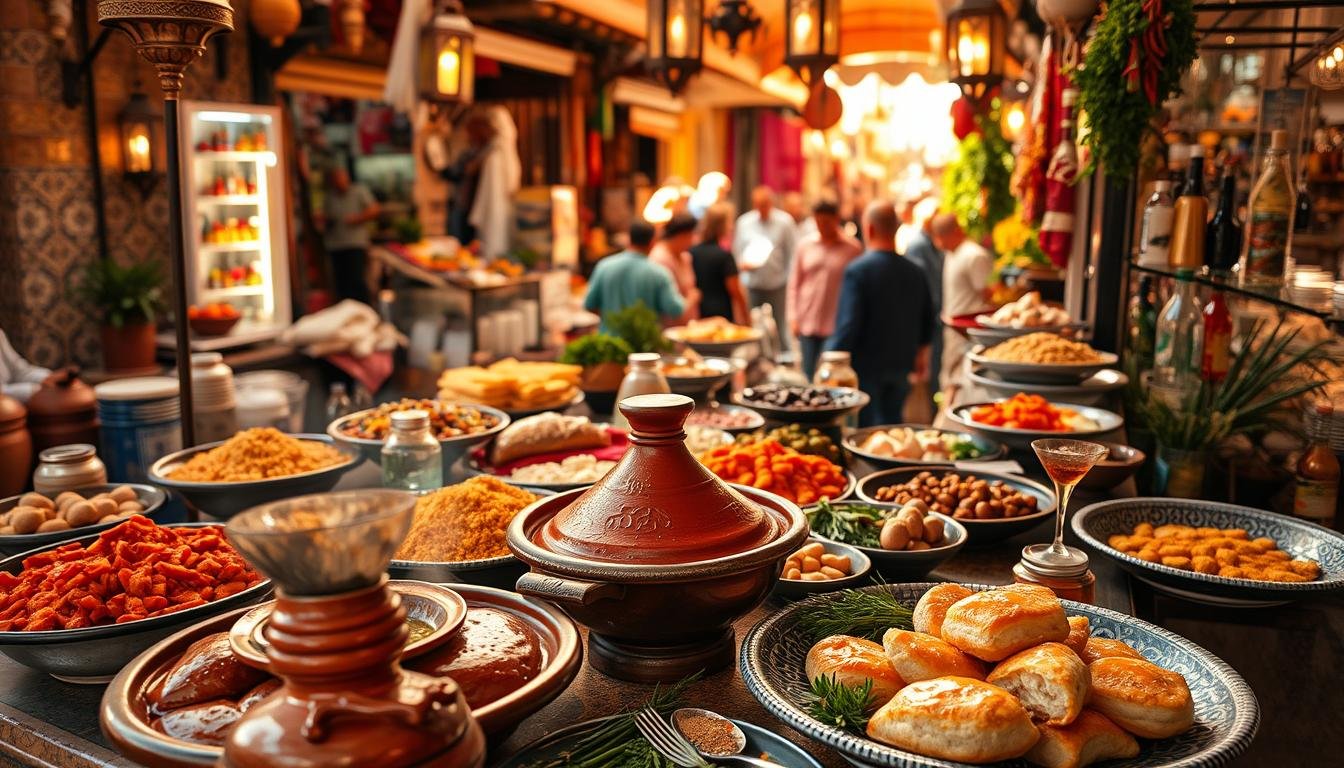
Explore the Tantalizing Tastes of Tangier Foods
Imagine walking through Morocco’s lively streets, filled with exotic aromas of Moroccan cuisine. This North African country’s rich food culture is a feast for your senses. Its flavors are so enticing, you’ll crave more.

Exploring tangier foods opens a world of spices, herbs, and cooking methods. Passed down for generations, these traditions bring to life dishes like savory tagines and sweet pastries. The variety of exotic food experiences will amaze and delight you.
Key Takeaways
- Discover the rich culinary heritage of Tangier, Morocco
- Explore the unique flavors and spices of Moroccan cuisine
- Experience the diversity of exotic food experiences
- Learn about the cultural significance of food in Moroccan culture
- Get inspired to try new recipes and cooking techniques
The Culinary Heritage of Tangier
Tangier’s food culture is a mix of many cultures. Its location at the crossroads of Africa, Europe, and the Mediterranean makes it special. Here, different flavors blend together, creating unique dishes.
A Melting Pot of Flavors
The food in Tangier is known for its bold north african flavors. It uses spices and herbs in special ways. Exploring traditional dishes lets you taste the city’s rich history.
Historical Influences on Tangier Cuisine
Tangier’s history as a trading center has shaped its food. It has been influenced by Arab, Berber, Mediterranean, and European cultures. This mix has created a unique taste.
So, Tangier’s food is a blend of old recipes. It shows the city’s rich cultural background. By trying these dishes, you can bring a piece of Tangier into your home.
Essential Ingredients in Tangier Foods
Tangier’s cuisine is rich with spices, herbs, and local ingredients. The city’s unique blend of African, Arab, and Mediterranean flavors is evident in its dishes. This mix of influences makes Tangier’s food special.
Spices and Herbs That Define the Cuisine
Spices and herbs are key in Tangier cooking. Ras el Hanout is a standout spice blend. It shows the region’s rich cultural heritage.
“The art of blending spices is a cherished tradition in Tangier, passed down through generations.”
Ras el Hanout and Its Components
Ras el Hanout, or “head of the shop,” is a mix of over 30 spices. It includes cumin, coriander, cinnamon, ginger, and turmeric. This blend adds depth and warmth to dishes like tagines and couscous.
Fresh Herbs in Tangier Cooking
Fresh herbs like parsley, cilantro, and mint are crucial in Tangier’s cuisine. They add freshness and flavor, often added at the end to keep their aroma and texture.
Local Produce and Staples
Tangier’s dishes rely on local produce like olives, olive oil, and vegetables. Grains like couscous and bread are also staples, often served with meals.

Where to Source Authentic Ingredients in the UK
In the UK, you can find authentic Tangier ingredients in specialty stores and online. Look for places that import directly from North Africa and the Middle East for the best flavors.
Kitchen Tools for Authentic Tangier Cooking
For a true exotic food experience, you need Tangier’s traditional cooking tools. These are key for making authentic Tangier dishes. They bring out the flavors and history of the cuisine.
Traditional Cookware
Tangier’s cooking relies on specific tools passed down through generations. The tagine pot and couscoussier are two crucial pieces.
Tagine Pots and Their Uses
A tagine pot is a clay pot with a conical lid. It’s perfect for slow-cooking stews and dishes. It’s great for cooking traditional recipes with lots of spices and flavors.

A couscoussier is a steamer for cooking couscous, a key dish in Tangier. Brass teapots are used for serving culinary delights like mint tea, a traditional Tangier drink.
Modern Alternatives for UK Kitchens
While traditional cookware is best, modern alternatives work well in UK kitchens. Look for cookware that acts like tagine pots and couscoussiers. Slow cookers and steamers can help you enjoy exotic food experiences.
Mastering the Art of Tangier Foods
To truly master Tangier foods, you need to understand the techniques that bring these dishes to life. Tangier cuisine is a rich tapestry of flavors. It’s influenced by its strategic location at the crossroads of Africa, Europe, and the Mediterranean.
Slow Cooking Methods
Slow cooking is a cornerstone of Tangier cuisine. It allows flavors to meld together and meats to become tender. Techniques like braising and stewing are staples. They often use a traditional clay pot known as a tagine.
- Braising: Cooking meat or vegetables in liquid over low heat.
- Stewing: Similar to braising, but with more liquid, creating a hearty, comforting dish.
Spice Blending Fundamentals
Spice blending is an art in Tangier cuisine. Blends like Ras el hanout are staples. This complex mix can include over 30 different spices, including cumin, coriander, and cinnamon.
Key spices in Tangier cuisine include:
- Cumin and coriander for earthy flavors
- Cinnamon and ginger for warmth
- Turmeric for its vibrant color and health benefits
Preserving Techniques
Preserving food is crucial in Tangier cuisine. It allows ingredients to be enjoyed year-round. Techniques include pickling, salting, and drying.
How to Prepare a Traditional Tangier Breakfast
Starting your day with a traditional Tangier breakfast is a culinary adventure you won’t want to miss. Tangier’s breakfasts reflect its rich cultural heritage. They blend flavors and ingredients from various influences.
Step-by-Step Guide to Making Baghrir (Moroccan Pancakes)
Baghrir, also known as Moroccan pancakes, are a staple of Tangier breakfasts. Here’s how you can make them:
Ingredients and Preparation
- 1 cup of fine semolina
- 1 cup of all-purpose flour
- 1/2 teaspoon of yeast
- 1/2 teaspoon of baking powder
- 1/4 teaspoon of salt
- 1 tablespoon of sugar
- 1 cup of warm water
Mix the dry ingredients together, then add the warm water slowly. Stir until smooth. Let the batter rest for at least 30 minutes.
Cooking Techniques
Heat a non-stick pan over medium heat. Pour a small amount of batter into the pan, spreading it evenly. Cook until bubbles appear and the edges start to dry. Repeat with the remaining batter.
Accompanying Dishes and Beverages
A traditional Tangier breakfast isn’t complete without accompanying dishes and beverages. Consider serving your Baghrir with:
- Fresh honey or jam
- Soft-boiled eggs
- Moroccan tea
- Fresh fruit
These additions complement the flavors of the Baghrir. They create a well-rounded and satisfying breakfast experience. Enjoy exploring the culinary delights of Tangier in the comfort of your own home.
Creating the Perfect Tangier Tagine
Making a perfect Tangier tagine is a journey into Moroccan cooking. This dish is named after the earthenware pot it’s cooked in. It’s a key part of Tangier’s food culture and shows the city’s rich food history.
Choosing Your Proteins and Vegetables
Choosing the right proteins and vegetables is key for a true Tangier tagine. You can pick from chicken, beef, lamb, or fish for a seafood tagine. Common vegetables include carrots, potatoes, and zucchini, with dried fruits for sweetness.
Building Layers of Flavor
The secret to a great tagine is its layers of flavor. Begin with onions, garlic, and ginger. Then add your chosen spices and herbs. The spice mix changes based on the tagine type.
Spice Combinations for Different Tagines
Chicken tagine often uses cumin, coriander, and cinnamon. Beef tagine might include paprika and cayenne pepper for a bolder taste.
Balancing Sweet and Savory Elements
A tagine’s charm comes from its mix of sweet and savory. Dried fruits like apricots or prunes add sweetness. Olives or preserved lemons bring a salty contrast.
| Tagine Type | Protein | Key Spices | Cooking Time |
|---|---|---|---|
| Chicken | Chicken thighs | Cumin, coriander, cinnamon | 45 minutes |
| Beef | Beef chunks | Paprika, cayenne, garlic | 2 hours |
| Vegetarian | Various vegetables | Ginger, turmeric, cumin | 1 hour |
Cooking Times and Temperatures
Cooking a tagine is slow and requires patience. It’s cooked on low heat for at least an hour. This lets the flavors blend and the meat become tender.
By following these tips, you can make a delicious Tangier tagine. It brings the tastes of Moroccan cuisine right to your table.
Seafood Specialties from Tangier’s Coast
Tangier, on the Mediterranean coast, offers a wide range of seafood dishes. These dishes show off the city’s rich culture. They are filled with North African flavors and exotic food experiences that will excite your taste buds.
Fish Chermoula Recipe
Fish Chermoula is a top seafood dish from Tangier. It mixes fresh fish with a zesty chermoula sauce. Chermoula, a Moroccan herb and spice mix, brings a fresh taste to any dish.
Preparing the Marinade
To make the marinade, you’ll need:
- Fresh parsley and cilantro
- Garlic
- Lemon juice
- Olive oil
- Cumin and coriander
Blend these ingredients to make a vibrant marinade. It will fill your fish with culinary delights from Tangier.
Cooking Methods
Fish Chermoula can be grilled or baked. Grilling gives a smoky taste, while baking keeps the fish moist.
| Cooking Method | Preparation Time | Cooking Time |
|---|---|---|
| Grilling | 10 minutes | 4-6 minutes per side |
| Baking | 10 minutes | 12-15 minutes |
Seafood Selection Tips for UK Markets
When buying seafood in UK markets, choose fresh and sustainable options. Look for fish that feels firm and smells good. For unique exotic food experiences, visit specialty fishmongers who bring in fresh seafood.
Street Food Favorites of Tangier
Tangier’s street food scene is a vibrant reflection of its rich cultural heritage. The city’s unique position as a cultural crossroads has influenced its cuisine. It’s a fascinating blend of traditional Moroccan flavors and international twists.
One of the most beloved street foods in Tangier is Briouat. It’s a delicate pastry filled with meat, onions, and spices. To make authentic Briouat, you’ll need to master the art of folding the pastry.
How to Make Authentic Briouat
Start by preparing the filling: sautéed meat, onions, and a blend of spices. Then, wrap the filling in a thin layer of dough.
Folding Techniques for Perfect Pastries
Folding is crucial for achieving the perfect Briouat. Here are some tips:
- Fold the dough into triangles, ensuring the filling is securely enclosed.
- Press the edges firmly to seal the pastry.
- Brush with egg wash for a golden finish.
Preparing Bocadillos with a Tangier Twist
Bocadillos, or sandwiches, are another street food favorite in Tangier. To give them a Tangier twist, try using locally-sourced ingredients like preserved lemons or spicy chorizo.
| Ingredient | Traditional Use | Tangier Twist |
|---|---|---|
| Preserved Lemons | Used in tagines | Adds a tangy flavor to Bocadillos |
| Spicy Chorizo | Used in stews | Adds a spicy kick to Bocadillos |
By incorporating these ingredients, you can create Bocadillos that are uniquely Tangier.
Sweet Treats and Desserts of Tangier
Discover the sweet side of Tangier with its unique desserts and traditional tea ceremonies. Tangier’s food scene is not just about savory dishes. It also offers a variety of sweet treats that will make your taste buds happy.
Crafting Perfect Chebakia
Chebakia is a traditional Moroccan dessert enjoyed during special times. It’s made by shaping dough into flower shapes, frying them, and then covering them in honey.
Shaping and Frying Tips
To make the perfect Chebakia, make sure the dough is not too thick. Fry the shapes until they’re golden. Don’t overcrowd the frying pan to keep the oil temperature right.
Mint Tea Preparation Ceremony
Mint tea is a big part of Tangier’s culture, showing hospitality and friendship. Making it is an art that’s easy to learn.
The Art of Pouring from Height
Serving mint tea traditionally means pouring it from high up to get a frothy top. Practice makes perfect for pouring without spilling.
Enjoy the rich flavors and scents of Tangier’s sweet treats and tea ceremonies. Whether you’re trying Chebakia or sipping mint tea, you’re joining a culinary tradition full of history and culture.
Hosting a Tangier-Inspired Feast
Start a culinary journey to Tangier from the UK. Host a feast that brings the city’s vibrant spirit to life. A Tangier-inspired feast is about creating a sensory experience for your guests.
Menu Planning and Timing
Plan a menu with a variety ofTangier dishes, like tagines, couscous, and pastilla. Think about the timing for each course to keep the evening flowing smoothly. Start with mezze, then the main course, and end with Moroccan desserts.
Table Setting and Presentation
The table setting is key to creating a realMoroccan ambiance. Use vibrant colors and intricate patterns on your tablecloth, plates, and napkins. Add candles and traditional Moroccan tea sets for the final touch. Garnish your dishes with fresh herbs and spices to add color and fragrance.
Dining Etiquette and Customs
Dining in Tangier is more than just eating; it’s an experience. Traditionally, Moroccans eat with their right hand, using bread as a utensil. You can encourage guests to try this or provide utensils. Play traditional North African music in the background. ServeNorth African flavorsin your cocktails or mocktails.
By focusing on these details, you’ll create a memorableMoroccan cuisineexperience. So, start planning your Tangier-inspired feast. Get ready to transport your guests to Tangier’s vibrant streets.
Adapting Tangier Foods for Modern Diets
It’s easy to add Tangier foods to your meals with a few changes. You can love the rich tastes of Tangier and still follow your diet.
Vegetarian and Vegan Alternatives
Tangier food has lots of vegetarian and vegan choices. You can swap meat for chickpeas or lentils in dishes like tagines.
- Use portobello mushrooms as a vegan alternative to meat.
- Opt for vegetable broth instead of chicken or beef broth.
Gluten-Free Options
Many Tangier dishes don’t have gluten. You can enjoy couscous made from corn or rice instead of wheat.
| Dish | Gluten-Free Alternative |
|---|---|
| Traditional Couscous | Corn or Rice Couscous |
| Tagine | Use gluten-free spices and avoid wheat-based ingredients |
Healthier Cooking Methods
Choosing healthier cooking ways can boost Tangier foods’ nutrition. Baking or grilling instead of frying is a big plus.
With these simple tweaks, you can enjoy Tangier’s culinary wonders while keeping your diet healthy and balanced.
Conclusion: Embracing the Spirit of Tangier in Your Kitchen
Exploring Tangier’s foods has been exciting. Now, it’s time to bring these flavors into your kitchen. Tangier’s cuisine is a mix of rich tastes and traditions. By using key ingredients and cooking methods, you can make dishes that feel like a trip to Morocco.
Ready to make a Tangier breakfast or a delicious tagine? You can also try the city’s seafood dishes. As you try new recipes, remember to make them your own. Each dish is a way to connect with Tangier’s spirit and hospitality.
Get your ingredients ready and put on your apron. Let Tangier’s flavors take you on a journey through its markets and streets. Your culinary adventure is just beginning, and Tangier’s foods are waiting for you.
FAQ
What is Tangier cuisine known for?
Tangier cuisine is famous for its mix of North African flavors. It uses spices and herbs, showing the city’s rich cultural mix.
What are some essential ingredients in Tangier foods?
Key ingredients in Tangier foods are Ras el Hanout spices and fresh herbs like parsley and cilantro. Local produce, such as olives and preserved lemons, are also important.
How do I source authentic Tangier ingredients in the UK?
To find authentic Tangier ingredients in the UK, visit Middle Eastern or North African grocery stores. You can also shop online for items like Ras el Hanout and preserved lemons.
What is the traditional cooking method for a Tangier tagine?
Traditional Tangier tagine cooking involves slow-cooking in a clay pot with a conical lid. This method melds flavors and tenderizes the meat.
Can I adapt Tangier recipes to suit modern diets?
Yes, you can modify Tangier recipes for modern diets. Try using vegetarian or vegan alternatives, gluten-free options, and healthier cooking methods.
What are some popular seafood dishes from Tangier’s coast?
Tangier’s coast is known for dishes like Fish Chermoula. It’s a flavorful fish dish marinated in herbs, spices, and lemon juice. Other seafood specialties also highlight the region’s fresh catches.
How do I make authentic Briouat pastries?
Making authentic Briouat pastries requires mastering folding techniques. You layer dough and filling, then fry or bake until crispy and golden.
What is the significance of mint tea in Tangier culture?
Mint tea is a big part of Tangier culture, showing hospitality and warmth. It’s served at social gatherings and special occasions. The art of pouring from height is a key part of this tradition.